Showing posts with label practical theology. Show all posts

Thursday, December 12, 2019

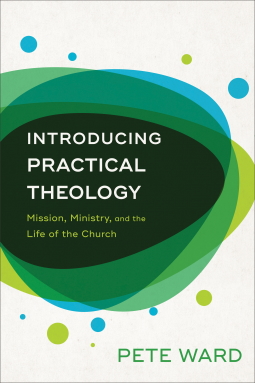
Introducing Practical Theology - A Review


Introducing
Practical Theology


by
Pete Ward

Though originally published in 2017, Baker Academic has more recently made Introducing Practical Theology available for more general review. 

The author begins with the very real premise that “... all theology can be practical” (p. 9). Earlier, in the introduction, he points out that

Modern theology has a basic fault line running through it between liberal theology, which prioritizes experience over doctrine, and conservative theology, which prioritizes doctrine over experience. Both the rejection of applied forms of theology and the uncritical acceptance of practical theology as distinct because it starts with practice are problematic because these views situate the discipline solely within the liberal tradition. This is a problem not because I would advocate an uncritical conservative approach. Rather, I argue for a collapse of these two distinctions—the liberal and the conservative—into one another. The distinction is therefore artificial.

Hence, theology, the author argues, is not merely theoretical, but also must influence the life of the church. How this is to be done is not always an easy task; but it is a task that the theology practitioner, the theology student, and all believers will want to undertake. 

The first two chapters seek to define Practical Theology, The author then begins connects Practical Theology to the Gospel and to the lives of believing individuals and communities.

The book then moves onto the “how” of practical theology - chapter 5. “At its heart,” the author states, “[Practical Theology] is a conversation,” a “complex and multilayered” conversation. He examines several of the individual scholars and writers that have contributed to the field. The next three chapters address how practical theology interacts with other branches of theology:

        6. Theological Reflection
        7. Theological Disciplines
        8. Culture

The final two chapters examine the role empirical research plays within the field and how the practitioner will produce Practical Theology - whether it be through living one’s life, writing, preaching, etc. The final chapter is by far the most practical chapter but follows nicely from the preceding chapters.

The book is well-researched - with copious footnotes and a formal bibliography of all quoted resources. As a piece of writing, it is an academic work. Though not stated officially, it could easily have been offered as a Ph.D. dissertation. Though not designed for general reading, the book is not difficult reading. This reader, a semi-retired pastor, found the book interesting.
_________
_____
This review is based on a free electronic copy provided by the publisher for the purpose of creating this review. The opinions expressed are my own.


Tuesday, September 18, 2018

The Portable Seminary (2nd Edition) - A Review


A Review

Full of useful information – this book is not a portable seminary. No reader should take it off the shelf and expect to cover the topics to the depth that a typical seminary education would provide.

Having said that some topics are covered in further depth than others. A good overview of theology is provided – this is most of the first third of the book, though the author does sneak chapters on “Biblical Languages” and “Interpreting Scripture: Hermeneutics & Exegesis” into the middle of the theological chapters (immediately following a chapter on the “Doctrine of Scripture” and prior to “The Doctrine of God the Father”}. The author is strongly supportive of inerrancy; but, he clearly states, this doctrine must not be used to distinguish between authentic Christians and apostasy. Definitions are given for many of the most important terms, but few examples are given. For example, a clear distinction is made between exegesis and eisegesis – but no examples are given of either. In fact, no single example (from beginning to end) of exegesis is given. Similarly, no complete example of writing a sermon (from idea to finished sermon outline or text) is given.

Other topics covered include:
  1. Five chapters introducing the Old Testament and New Testament 
  2. Three chapters on evangelism: Apologetics, World Religions, and Missiology 
  3. Five chapters on church history 
  4. Four chapters on practical theology: Homiletics, Leadership, Ethics, and Christian Education 
It is not clear who has officially contributed to each chapter, versus allowing the quoted material to be included. Several pages of “Contributors” are included, but it is not clear who contributed what to the final volume. The ARC I was provided did set aside “1 page” for “Acknowledgments”, but it was blank and it is not clear what role these “acknowledgments” played in the development of the book.

To summarize, the book has lots of information, but the depth and helpfulness of that material will vary depending on the chapter and area of study. USE WITH CAUTION.
_____________
This review is based on a free electronic copy provided by the publisher for the purpose of creating this review. The opinions expressed are mine alone.


Tuesday, October 13, 2015

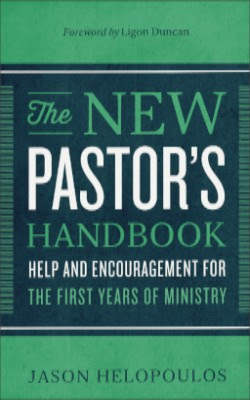
The New Pastor's Handbook - A Review


The New Pastor’s Handbook


NewPastorsHandbook.jpg


by
Jason Helopoulos


A Review


Every new pastor needs a hand to hold onto. Often that hand will begin with a book. For me that book was Lloyd Perry’s A Manual of Pastoral Problems and Procedures.  It was helpful and having the author at the front of the class gave it added meaning. However, it was written in 1971 and does not represent the 21st century church. Other books have been written to fill that need - including one by Jason Helopoulos.


Though designed for new pastor, the book discusses 48 questions facing every pastor. The author begins by discussing the nature of a call, the practical issues that face all pastors, and ends with a few questions on self care. Some sections are dedicated to specific types of ministry (the solo pastor, the youth pastor, etc.).  The responses are brief, maybe too brief, but certainly readable over a couple of months if one would read one entry per night. The eager reader could easily read two or three chapters each evening, a more thoughtful reader may want to take a longer time on each entry. With only 3-4 pages set aside for each issue, responses are of necessity brief. Some topics could be fleshed out with a complete book - but certainly no pastor or student has time to read separate books on each topic in the first year of ministry - perhaps over a lifetime. On the other hand, the pastor will want to flesh out his reading by locating and reviewing some of these larger works as he works and serves the people puts across his path.


The book is not deep - but contains a great deal of practical advice. It will fit well into a Pastoral Procedures course in the Bible College; it might serve better as an ancillary text for a similar seminary course. It would also fit well when kept within reach of any pastor serving the local church.
______________

This review is based on a free copy provided by the publisher for the purpose of creating this review.  The opinions expressed are my own.


Tuesday, January 6, 2015

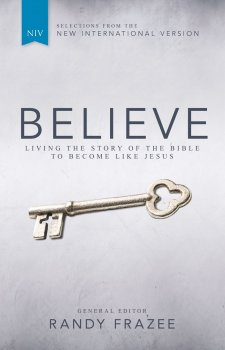
Believe: Living the Story of the Bible to Become Like Jesus - A Review


A Review


Believe is the third book I would recommend to the individual wanting to study theology without being spoon fed by an author.  The older of these is nearly (sadly) out of print, Gordon R. Lewis’ Decide For Yourself.  The second book was published more recently, Darryl Aaron’s Understanding Theology in 15 Minutes A Day.  Randy Frazee has now published a similar book that allows the reader to do theology for herself or himself.


The book, as a whole, is divided into three sections.  The first covers the topics most commonly found in a systematic theology text.  The second examines what might be termed “practical theology” - answering questions about how our beliefs influence how we live.  The third section, using the Fruit of the Spirit as a guide, focuses on how faith effects who we are, i.e. a “heart theology”.  


The three sections are further divided into chapters discussing major topics.  The chapters are divided into sub-topics, each beginning with a brief one paragraph discussion of the questions being addressed.  My only complaint with the entire book is that these sub-topics are only delineated by the use italics - no bold print, no dark lines, no icons separate the end of one sub-topic and the beginning of another except that the following paragraph is in italics.  


This paragraph is followed, not by lists of scriptures as found in the earlier books, but by the scriptures (using the NIV) themselves.  Scriptures may be a single verse (rarely), a pericope, or a chapter or two related to the current topic.  Because the scriptures are quoted, the current book is substantially longer than the earlier volumes, though the information detail remains about the same.


The current book is recommended for the lay Christian seeking to understand why and what they believe.  In the local church, it could easily serve as the basis for a year long Sunday School or Bible Study discussing similar topics.  The two more practical sections of Believe would make it a welcome addition to this audience.  It may also have a place in a Bible College or Seminary course where denominational indoctrination is of less importance than personal spiritual growth.  I would also recommend this book for the pastor or established Christian looking for a fresh way to explore one’s faith and its application to life.
______________

This review is based on a free copy provided by the publisher for the purpose of creating this review.  The opinions expressed are my own.