The Missed Mission of
The Great Commission
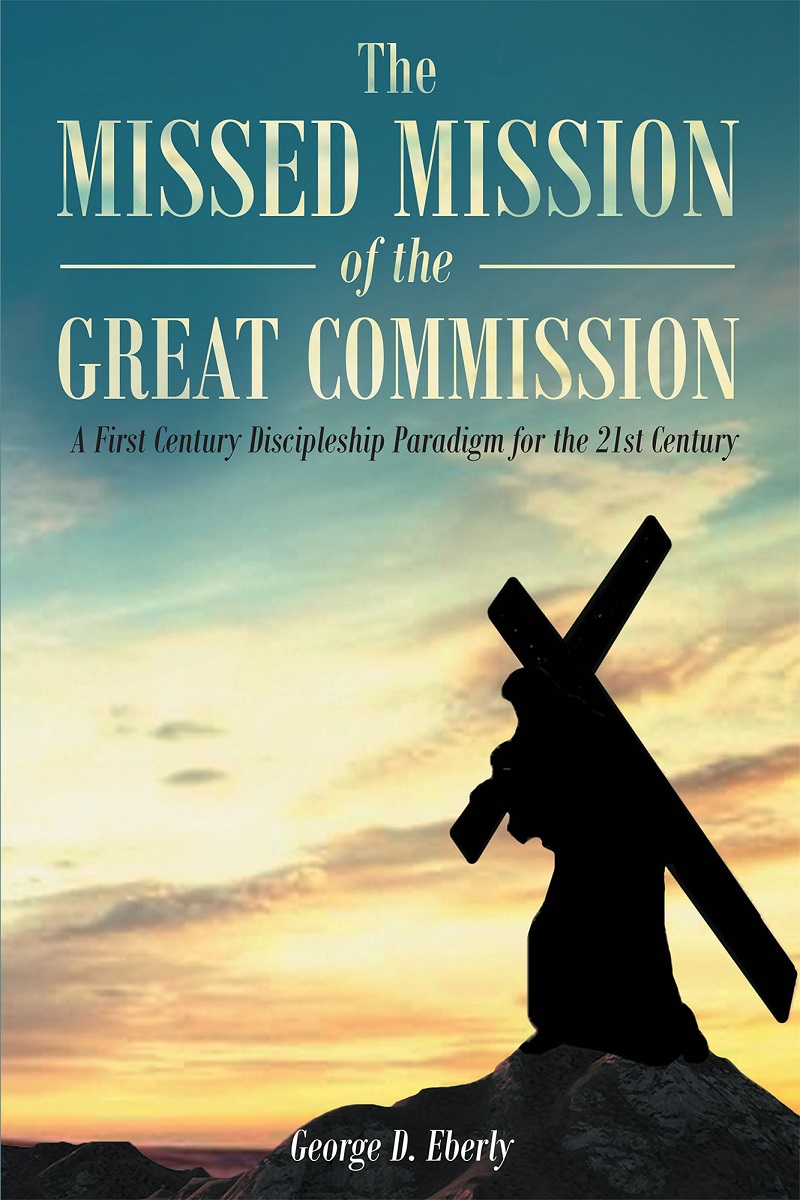
by
George Eberly
A Review
A week ago I found myself in trouble. A Facebook acquaintance (he was not even a Facebook friend at the time) asked how to go about marketing a book he had written. Being a book reviewer, I suggested getting book reviews. Now, George Eberly is not dumb, so he reminds me that I am the only book reviewer that he knows and asks me, “Would you like to review my book?” Oops! I barely know George. I know even less about the book. How am I supposed to know if I “would like to review” his book? Now, I am also not dumb, so I reply, “I don’t know if I would like to, but I would be willing to give it a shot.” I did remind George that according to one source, I only review 85% of the books I receive for review. This is considered a reasonable response rate (80% is the suggested minimum). I also reminded him that I do not give good reviews to all the books I receive - I have given books anywhere from 1-star (once or twice wishing I could give 0-stars, but that is not allowed) to 5-star ratings. The IRS does not allow me to accept a free book for review unless I am allowed to review it unconditionally - George Eberly was going to have to take a chance. And he did.
It was two to three hours later that I received an electronic version of George Eberly’s book. I was careful as I first looked at the book - after all, an unknown book from an unknown author could be very good, disappointing, or just plain offensive. I had no need to be afraid of The Missed Mission of The Great Commission. I began to read - within an hour I had read the Introduction and the first two chapters. I was ready to answer George’s original question, “Would you like to read my book?” In a personal note, I replied, “George - I can now answer your question. I have read the intro and the first two chapters of the book, and I want to read AND review it! What I have read so far is well-written and attention grabbing. Thank you for sharing and I will be looking forward to finishing it.” A week later, after spending time reading and preparing last week’s sermon, here is my review.
George Eberly has written a book that presents a paradigm for growing mature disciples within the church - whether we are discussing the local church, the global church, or the many para-church ministries of the Christian Church. The book allows the believer to move from evangelism, to conversion, to discipleship, to servanthood. The author has done this by providing a Biblical foundation that is well-documented, and practical (especially chapter 10). Much of what he has written is illustrated by anecdotes from his own ministry and the ministry of others.
My only concern with the book is a sense that the author thinks that the paradigm he is presenting is expected of every church. Alarm bells go off in my head when there is any type of expectation that every believer, that every Christian ministry, every church, is to have the same experience and practice. Though the author does leave room for individualization, I am left with the feeling that he thinks every church (however you define that) should fit this mold. The author does not strike this attitude hard or often, but it does creep into his narrative. Hence, I see this as a weakness, not a failure, of the book.
Having said that, I am convinced that pastors, pastoral candidates, and local church and denominational leaders, should take the time to read this book. The concepts are important for the healthy growth of the church. There is both truth and practical help that can easily be fit into multiple levels of ministry within the church. Both professional pastors and the lay leadership of the local church will be challenged to help grow believers who will be ready to serve the current generation of believers and the next.
______________
This review is based on a free electronic copy provided by the author for the purpose of creating this review. The opinions are mine alone.