Showing posts with label culture. Show all posts

Wednesday, April 1, 2020

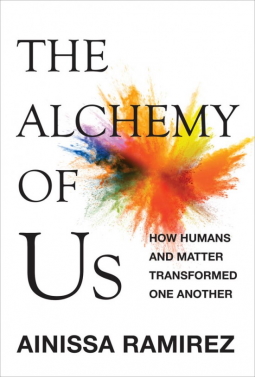
The Alchemy of Us - A Review


The Alchemy of Us


by
Ainissa Ramirez

Ainissa Ramirez has written a fascinating book. Each chapter begins by looking at the need for a well-known invention, then at the steps leading to its creation, and finally, at the repercussions (both good and bad) the invention has had on 21st-century culture. It is a wonderful blending of history, science, and culture.

The book is very readable - written for a high school senior or the college-educated public. Anecdotes leading to the invention are interesting as they portray events less familiar than the invention itself. Details surrounding the invention expand on the facts most of us grew up learning. The author weaves stories of science, medicine, art, music, and literature, into the narrative as she explores the repercussions of each individual invention. A fun read.

My biggest concern is the style chosen by the author and publisher to present citations (at least as used in the ARC I was provided and as displayed on-line by Amazon). There are no footnotes or citations in the body of the text. An addendum to the book includes an extensive list of references. They are tied to the main text by quoting a four or five-word phrase just prior to each reference. These are not grouped by pages or by chapters - meaning that if the reader is looking for more information on a topic mention in the text, one will need to locate a quote from the passage that is also included in the list of references. It is all very inconvenient. This may be a valid way to create a list of citations, I found it confusing. Using Google was easier to trace references than using the addendum. It is this “flaw” that leads to a four-star review. NOTE: I do not have a copy of the published text. It may be that a better citation style was used in the final book.

Read the book - be prepared to consult Google to satisfy the curiosity it will generate.
______________
This review is based on a free electronic copy provided by the publisher for the purpose of creating this review. The opinions expressed are my own.



Thursday, May 21, 2015

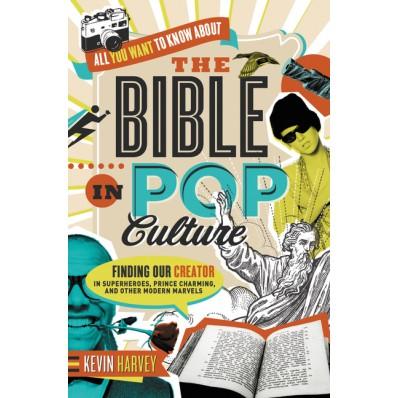
All You Want to Know About The Bible in Pop Culture - A Review


All You Want to Know About
The Bible in Pop Culture
by
Kevin Harbey


A Review


A mix of cultural reflection, Biblical application, and Bible study.


The book starts with an interesting premise – what does pop culture reveal about our faith and the world in which we find ourselves. It does this by looking at the details found in a variety of cultural milestones – from television to movies to music. By looking at a variety of snippets from assorted media, the book attempts to look at how faith, or at least the world's impression of that faith, has influenced the arts.


While the text does accomplish its purpose by looking at these snippets of media content, it does little to prepare the user to do his or her own reflection on the media in the future. The book is designed to show a view of the world as it is found in the first two decades of the 21st century. Along with its text, the book does this with a set of trivia challenges associated with each chapter and with the book as a whole. In fact, these trivia puzzles occupy about 20% or more of the book.


It is the lack of tools to help the reader to continue reflecting on culture which is the major drawback of the book for this reader. It would have been helpful to include principles, not just illustration after illustration, of how to find faith's influence on modern culture.


Is the book of value? Yes, for the individual attempting to understand the possible role of faith in the first half of the 21st century. It will be of less help for the person hoping to evaluate faith's role moving into the next five decades of the century.
______________
This review is based on a free copy of the book provided by the publisher for the purpose of creating this review.  The opinions expressed are my own.

Tuesday, October 28, 2014

Rogerson’s Book of Numbers - A Review


Barnaby Rogerson


A Review


I like MATH.  I remember seeing a book years ago that started at one and moved slowly through important numbers in science.  Rogerson’s Book of Numbers takes a different approach.  Though not starting with , it starts with large numbers and through 270 pages moves down to zero.  Each entry is interesting and provides references in history, science, and culture that adds value to specific numbers.  For example, early in the book, the author discusses the average distance of 237,600 miles that separate the earth and the moon.  


237,600 MILES OR 30 EARTHS


237,600 miles is the average distance between the earth and the moon, a number which suggests an intriguing inner harmony to our universe, for it is thirty diameters of the earth, sixty radii of the earth or 220 moon radii. The mystical author and numerologist John Michell would reveal these figures with the full force of a relevation (sic) during his lectures. A self-declared ‘radical traditionalist’, Michell campaigned long and hard against the destruction of England’s ancient number systems in favour of the decimal system.


Though the book is not a spiritual book, it does touch on a great many spiritual topics.  Immediately after discussing the distance between the earth and the moon, the book moves on to discussing the 144,000 who will be saved as proclaimed as by the Jehovah’s Witnesses.  Besides referencing the JW believe, the author also quotes from the source of their belief, Revelation 7:4-5.  


But spirituality is not limited the Christian tradition.  A few pages later the author briefly (note - all the notes are brief) discusses the 124,000 prophets sent before the coming of the Prophet Muhammad.  


The last entry is a reference to the Buddhists nirvana.  Quoting Buddha,


‘Where there is nothing; where naught is grasped, there is the Isle of No-Beyond. Nirvana do I call it – the utter extinction of aging and dying … That dimension where there is neither earth, nor water, nor fire, nor wind; neither dimension of the infinitude of space, nor dimension of the infinitude of consciousness, nor dimension of nothingness, nor dimension of neither perception nor non-perception; neither this world, nor the next world, nor sun, nor moon. And there, I say, there is neither coming, nor going, nor stasis; neither passing away nor arising: without stance, without foundation, without support. This, just this, is the end of stress.'


Hence, the author ends with “nothingness” as his final entry.  


As the book demonstrates throughout, mathematics is not just a study of numbers, theories, and skills;  mathematics is embedded, deeply embedded, in cultures around the world.  Though at one level, the book is filled with trivia, at another level it provides insight into people throughout history and around the world.  The book is written for the average adult reader, though it will be of more interest to the reader with an interest,  even if not a background, in mathematics.  It is not necessary to read every entry to enjoy its contents - though, if you are like me, you will end up picking up the book again and again to read entries missed on earlier scans.  


The book was worth the time reading - and I will look forward to picking it up again in the future.  It needs to be a ongoing work - numbers are missing (infinity and negative numbers are the most obvious).  But that does not distract from the work as presented to today’s audience.
______________

This review is based on a free electronic copy provided by the publisher for the purpose of creating this review.  The opinions expressed are my own.