Showing posts with label Science. Show all posts

Wednesday, April 1, 2020

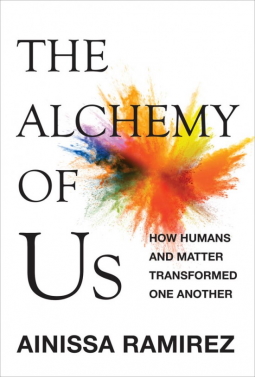
The Alchemy of Us - A Review


The Alchemy of Us


by
Ainissa Ramirez

Ainissa Ramirez has written a fascinating book. Each chapter begins by looking at the need for a well-known invention, then at the steps leading to its creation, and finally, at the repercussions (both good and bad) the invention has had on 21st-century culture. It is a wonderful blending of history, science, and culture.

The book is very readable - written for a high school senior or the college-educated public. Anecdotes leading to the invention are interesting as they portray events less familiar than the invention itself. Details surrounding the invention expand on the facts most of us grew up learning. The author weaves stories of science, medicine, art, music, and literature, into the narrative as she explores the repercussions of each individual invention. A fun read.

My biggest concern is the style chosen by the author and publisher to present citations (at least as used in the ARC I was provided and as displayed on-line by Amazon). There are no footnotes or citations in the body of the text. An addendum to the book includes an extensive list of references. They are tied to the main text by quoting a four or five-word phrase just prior to each reference. These are not grouped by pages or by chapters - meaning that if the reader is looking for more information on a topic mention in the text, one will need to locate a quote from the passage that is also included in the list of references. It is all very inconvenient. This may be a valid way to create a list of citations, I found it confusing. Using Google was easier to trace references than using the addendum. It is this “flaw” that leads to a four-star review. NOTE: I do not have a copy of the published text. It may be that a better citation style was used in the final book.

Read the book - be prepared to consult Google to satisfy the curiosity it will generate.
______________
This review is based on a free electronic copy provided by the publisher for the purpose of creating this review. The opinions expressed are my own.


Tuesday, October 17, 2017

Evidence That Demands A Verdict - A Review


Evidence That Demands A Verdict.cover.jpg


A Review


Let me begin with a bit of truth in advertising. I was an invited member of the original Launch Team for the newest version of “Evidence That Demands A Verdict”. In return for being a part of the Launch Team, I received an e-book version of ‘Evidence” and a tee-shirt promoting the book. However, the e-book was flawed. By design, the pre-publication version that we were sent included a large watermark in the middle of each page, making it very difficult to read (at least for this reader). In spite of being a part of the Launch Team, I decided it would be unfair to review a book I could not fairly read.  Two months later I found (using my normal review book resources) an opportunity to receive and review a hard copy of the book. This review is based on both the original “Launch Team” version which I received last June and the hard copy I received earlier this month.


-----------------------------


I remember receiving the original version of “Evidence” as a junior or senior in college. I devoured it. As a new believer, I wanted to know and understand as much as possible about this faith to which I belonged. Later, after graduating from seminary, I discovered a new version and purchased it. I remember trying to become as excited about it as I had the original - it was not to be. I do not if it was further education, my personal faith journey (which took an unneeded bounce during those years), the fact that I had changed the immediate direction of my career (from pastoral ministry to Computer Science college professor), or the book itself which caused the loss of interest; but I had lost interest.


The year is now 2017 and the third (or is fourth?) edition of this classic book is being published. The newest version is not one I would not want to sit down and devour (though I know there are some readers who have done that), but I would not want to miss having the newest edition on my shelf. Rather being aimed for the newly converted college student, this new book is aimed for the college or seminary classroom or for the desk and shelf of the pastor or scholar. For many, not sitting in a classroom, it will become a reference book, rather than late night reading. But it is a reference book that many (or most) believers will want on their shelves.


At just under 800 pages, the book addressed most of the issues attacked by modern critics of the Christian faith. Whether it be philosophy, religions, history, or science (plus more) the reader will be challenged to examine evidence for the Christian faith. Whether a believer, skeptic, or atheist, the critical reader will need to respond to the author’s arguments. The book is thoroughly referenced with in-text notes and a Bibliography providing complete details of each resource quoted or used in the book. The only missing element, for most students of the scripture, is a set of sources allowing followup to the many topics discussed in the book. It will become the responsibility of the pastor, the teacher, or the individual reader to provide access to additional resources on topics of interest.  It is this missing element that prevents this reviewer from giving the book a 5-star review.


The book is not general reading - it is aimed at the scholar. Few (are there any?) diagrams can be found within the covers, though charts are present as needed which will help the reader to process the evidence presented.
_____________
This review is based on free paper and electronic copies provided by the publisher for the purpose of creating this review. The opinions are mine alone.


Tuesday, January 5, 2016

Divine Science - A Review


by


A Review

Rarely, if ever, have I run across an author that accepts scripture and science at face value, as equal partners in discovering truth. The author has no problem in stating that he sees himself as a “cradle Catholic”; more importantly, at least to this reader, his faith in the Grace of God is his own. At the same time, the author makes it clear that as a tenured member of the University of California-Irvine Department of Physics, he is a scientist.  He takes his faith seriously; he takes science seriously.

Too often, these kind of statements are made so that the speaker can join the discussion, though the statements are made lightly. But as the reader makes his way through this book, it becomes clear that Dr. Dennin attempts to make both of these foci key parts of his decision making. Though I do not agree with all of his conclusions, I do appreciate his attempts to weave his faith together with his science to make a single coherent world view. Something most writers find hard to do.

Using a combination of Scripture, Theology, Philosophy, and Science, the author seeks to discover the “fullness of reality” as God intended it to be seen – giving a fuller view than would be possible if we relied on one or the other alone. 

I do appreciate the work that Michael Deninn is attempting to do. I remember the job interview I had at a Midwest Christian College. I was told up front that I would be fired if I in any way supported creation (note, my field was Computer Science). The author does not support a seven-day creation approach, but, at the same time, he has no problem acknowledging God’s presence and work in the creation event. Early in the book, he quotes an undergraduate faculty member addressing the Creation story:

That story may be factually false, but it is a myth. And a myth can convey truths that are more important, more salient, and more applicable than any fact that you might encounter. That story is better than factual, it is truthful.

The author accepts scripture at face value, recognizing that it represents different authors, with differing backgrounds, and written using different genres. Each of these truths serves as the foundation for good exegesis – and means that he takes not only his faith seriously, but also the scriptures.

The reader may not accept all of the conclusions that come from the author (as I said earlier, this reader does not), but the author and this book do deserve a careful reading by both the theologian and the believing scientist. 
______________

In the interest of openness, I should point out that this review is written by an ordained Protestant pastor who spent 24 years in the college classroom teaching Computer Science.  The review is based on a free electronic copy of this book provided by the publisher for the purpose of creating this review.  The opinions expressed are mine alone.

Monday, December 7, 2015

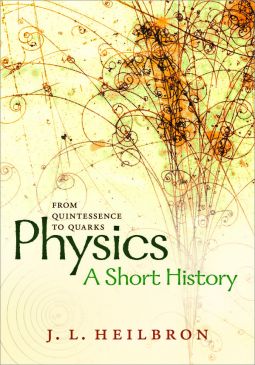
Physics: A Short History From Quintesence to Quarks - A Review


Physics A Short History.jpg


A Review


An interesting book - written for the knowledgeable reader, this history of physics assumes a great deal of prior knowledge as the moves from the study of physics as evidenced by the ancient Greeks into the early Christian Era, ending up in the modern era. The writer writes as if the reader will know the main (and some not so main) players in that history, dropping names and events that might be well-known to the physics student, but less so to the average lay reader.


This becomes less of a problem as the book moves slowly into the medieval and modern eras as names that have become famous during the development of the atomic bomb or other intriguing scientific discoveries move into the discussion.


Though interesting, these assumptions occasionally make the book difficult to follow - even for this scientifically knowledgeable reader.  The book would be a good text or ancillary text for a graduate history of science course. I would have a difficult time recommending it for the typical college graduate without having an undergraduate degree in the sciences.
______________

This review is based on a free electronic copy provided by the publisher for the purpose of creating this review.  The opinions expressed are my own.
Smart But Dead - A Review

Smart But Dead.jpg


A Review


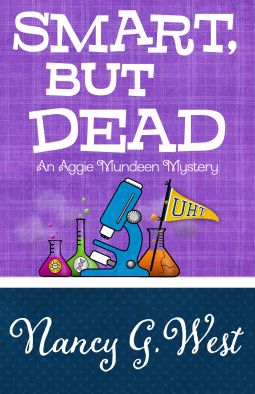
I have just finished reading the best cozy mystery - the one I wished I had written. Having spent most of my career on the college campus, I have noticed the many opportunities for murder on the college campus - faculty killing faculty, students, or administrators; students killing faculty or students; administrators killing ….  Well, you get the point.  Nancy G. West has done it well.


The geneticist at San Antonio’s University of the Holy Trinity, whether administrators, colleagues, or students, seemed to be at each other’s throats. They all had their reasons for seeing Dr. Carmody dead - and were happy that he was. But, did somebody kill him?


It was the first question that faced Aggie Mundeen. There were others - such as what would happen to her relationship with San Antonio’s Detective Sam Vanderhoven when all was said and done. What about all the research that was being done at UHT on human genome project, was another. The questions kept mounting - but would the answers come?


A fun read, the perfect cozy mystery. The book also whets the appetite of this reader for science and forced him to Googling current research in genetic engineering; though the science in the book is not so heavy as to lead the average reader in the dust.


For the reader looking for a smarter than average cozy mystery, this book fills the need.
______________

This review is based on a free electronic copy provided by the publisher for the purpose of creating this review.  The opinions expressed are my own.

Monday, October 19, 2015

Big Science - A Review


Big Science.jpg


A Review


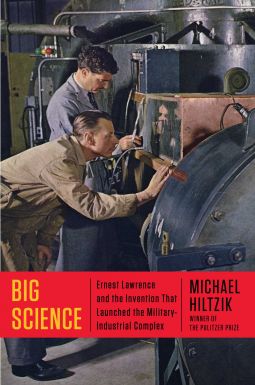
Though the book’s title and sub-title would seem to focus on the development of “Big Science”, the book is also a look at the scientific career of Ernest Lawrence.


Having spent a third of my life in the shadow of Berkeley, Stanford, Livermore, etc., I was well aware of many of the places in which the book is set - including having spent various amounts of time during High School and College at some of the locals mentioned in the 30+ years covered by the book. I remember looking across a field that lay near my house, seeing a huge water tower that, to my 7 or 8 year old mind, looked much like the nuclear bombs that were being exploded as tests on isolated islands or in the nearby Nevada desert.


The sites mentioned, included not only California, but such diverse locations known for housing various portions of the Manhattan Project: Los Alamos, the University of Chicago, Oak Ridge, Hanford, Argonne, etc. Each played a role in producing the first atomic bombs, the first hydrogen bombs, and, eventually, the first thermonuclear bombs. Along with places, we meet the people (Lawerence, Teller, Oppenheimer, etc.) who fashioned these implements of destruction - whether they come from the sciences, engineering, or politics. We see how relationships played a key role in the development of these new weapons. We also get a glimpse of the technology and the path it took toward using atomic energy - both as a weapon and as a tool to assist mankind in its own growth. The book’s science is not overwhelming, but provides enough details for the layman to appreciate the journey much of science took in the midst of the 20th century.


There is also, as hinted at in the sub-title, a strong emphasis on the growth of the merging of the military, industrial, political, and academic research to accomplish projects which were larger than could be understood by a single person. At times the pieces coming together were so big and so diverse that it was difficult for the reader to track the players in the game at any given time.


Though physics was the least interesting of the sciences to this reader, Hiltzik manages to present a story that held this reader’s attention. The book is recommended for anyone seeking to understand the nuclear politics that defined many of the years preceding the 21st century.
______________

This review is based on a free electronic copy provided by the publisher for the purpose of creating this review.  The opinions expressed are my own.