Showing posts with label history. Show all posts

Thursday, March 18, 2021

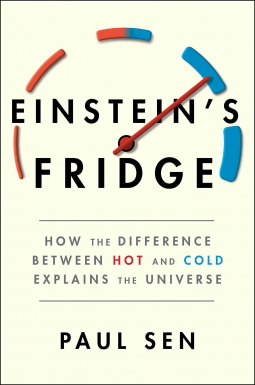
Einstein's Fridge - A Review


Einstein's Fridge


;]

by

Paul Sen


A Review


Paul Sen has created a fascinating book discussing the history of physics from the mid-19th century to the present as he takes the reader on a journey through the development of the field of thermodynamics.


During our journey we meet men and women who shaped this new field of study. Some of those we meet are well-known (e.g. James Watt), some are well-known for their contributions in other fields (e.g. Alan Turing), and some are more obscure (e.g. Emmy Noether). Regardless of their reputation, each contributed significantly to the body of knowledge we now know as thermodynamics.

Focusing on the people, the book is not a mathematical monograph, but uses a series of thought experiments to help his readers understand the growth of this subfield of physics. It was interesting how new ideas grew upon each other and, occasionally, folded back on an earlier researcher to again further the world’s understanding of the relationship between heat and cold. The book will be appreciated by anyone with a basic high school or college freshman physics course under their belt.

Two notes found in the Epilogue of the book help the reader understand the author's intention of writing this work:


At its heart, this book is a celebration that between 1850 and today the science of heat has played a vital role in promoting the greatest improvement in the human condition in our species’ entire history. 

-----------------------------------

The main obstacle to dealing with climate change isn’t scientific. Instead, it’s political and emotional. While some refuse to accept that the problem exists, others refuse to accept the solutions. That brings me back to why I wanted to write this book. Now, more than ever, it’s important that all of us have a basic grasp of the science of heat, so that we can make sensible and informed decisions about how best to ensure progress while preserving or improving living conditions fo fellow humans without ruining the environment. Should we commit to nuclear energy? Should we drive electric cars? How much tax should we pay on petrol, and how much should we subsidize wind farms? We will be in no position to answer these vitally important questions unless we have a basic understanding of the laws of thermodynamics.

Weaving together Carnot’s basic understanding of heat, Turing's application of information theory and embryology, and Einstein’s Theory of General Relativity, as well as the work of many others, I give the book five stars.
_____________
This review is based on a free electronic copy provided by the publisher for the purpose of creating this review. The opinions are mine alone.

Wednesday, January 20, 2021

Hope, Faith, & A Corpse - A Review


Hope, Faith,
& A Corpse

by

Laura Jensen Walker

A Review


Rev. Hope Taylor had arrived for her first day at her new parish where she had been assigned as Pastor of Pastoral Care at Faith Chapel Episcopal Church. She learned two things that first day. First, she learned that it would be difficult as a woman to serve as a pastor at the small church located an hour east of Sacramento. Second, she would learn that there was a dead body in the small worship center located off the main sanctuary - a dead body that was not supposed to be there and who was still laying in his own blood.

I was surprised that a more liberal church would have the same kinds of problems with a female pastor as the conservative churches I am familiar with - people walking out when she started to preach, having doors closed in her face when visiting parishioners, or being accused of Stanley King’s murder by church members.

Nobody was terribly upset that Stan had died, he was not a likable man; but none of the many suspects would confess to his murder either.

Matters got worse when a skeleton was dug up by Bogie, Hope’s dog, in her backyard. Things were going from bad to worse for the new pastor.

The church had its normal mix of jealousies, secrets, and control issues. I felt at home. At the same time we get a glimpse of God’s grace at work as Hope and her new friends zone in on solving, not one, but two murders. With a combination of honesty, humor, and history, the author has crafted a delightful weekend’s reading. Music from the 60s and 70s and black and white movies added color to the book. I give the book five-stars.
______________

This review is based on a free electronic copy provided by the publisher for the purpose of creating this review. The opinions are mine alone.


Saturday, December 5, 2020

Open For Murder - A Review


Open For Murder

By
Mary Angela


The culprit in this cozy mystery was as elusive as George the cat. Set in the heart of Black Hills National Forest in South Dakota, home of the Homestake Mine. Homestake was a gold mine converted at the beginning of the 21st century into a major physics research center. It was also home to Spirit Canyon Lodge, recently inherited by Beth Everett and now reopened as an inn located on the edge of Spirit Canyon.

The inn was mostly rented out this weekend for a small sorority’s 10-year reunion. However, Enid Barrett, the only real competitor to Beth’s lodge, also stopped in for a one night visit. Her goal was to put Spirit Canyon Lodge out of business. It did not go well - she was found dead the next morning.

The suspects included the guests and employees of the lodge, but the local sheriff decided Beth Barrett was guilty early in the process. Beth certainly could have pulled it off - she had means, motive, and opportunity. It now fell to Beth’s friends to stumble (literally) onto the killer.

The book included enough historic, geographic, and biographic details to warrant several Google searches for this reader - a trait that improves the quality of a cozy mystery very quickly. This reader’s only real concern was the small hint of a paranormal presence - though not a major part of the story, it was an unnecessary distraction from the rest of the book. I will give the book 4-½ stars out of a possible five.
______________
This review is based on a free electronic copy provided by the publisher for the purpose of creating this review. The opinions expressed are my own.


Wednesday, May 13, 2020

The Louvre - A Review


The Louvre


by

James Gardner 


James Gardner presents a readable history of the world’s most famous art museum.  The book focus on three different aspects of this history: the collection, the building, and its role in the history of Paris. This is both the book’s strength and the weakness: it covers a wide girth of material and the reader will enjoy it far more if they already have a good grasp of the architecture and history of France and Paris.


The author suggests early in the book that most of the works of art will need to be viewed on the internet.This is not only true for the works of art, but it is also true for historical and geographical references mentioned throughout the text. The reader will need to spend almost more time on the internet to fully enjoy the story presented here. That can best be accomplished by reading using two windows on a computer - one for the text of the book, the other for a web browser to search for pictures, historical references, and architectural features mentioned in the book. However, most readers will use a paper copy of the book or an e-reader, both of which might make the use of the internet difficult.  


The other major concern a reader might have is the limited number of references provided. There are some, but they are not complete. This may occur because the author, as previously noted, assumes a basic knowledge of French and Parisian history. The book would be more help to the general by a complete set of footnotes with sources and where the reader can find more information. 


The book presents an interesting history, but needs much to be discovered by the reader.

______________

This review is based on a free electronic copy provided by the publisher for the purpose of creating this review.  The opinions expressed are my own.


Wednesday, April 1, 2020

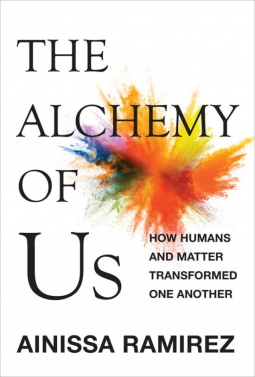
The Alchemy of Us - A Review


The Alchemy of Us


by
Ainissa Ramirez

Ainissa Ramirez has written a fascinating book. Each chapter begins by looking at the need for a well-known invention, then at the steps leading to its creation, and finally, at the repercussions (both good and bad) the invention has had on 21st-century culture. It is a wonderful blending of history, science, and culture.

The book is very readable - written for a high school senior or the college-educated public. Anecdotes leading to the invention are interesting as they portray events less familiar than the invention itself. Details surrounding the invention expand on the facts most of us grew up learning. The author weaves stories of science, medicine, art, music, and literature, into the narrative as she explores the repercussions of each individual invention. A fun read.

My biggest concern is the style chosen by the author and publisher to present citations (at least as used in the ARC I was provided and as displayed on-line by Amazon). There are no footnotes or citations in the body of the text. An addendum to the book includes an extensive list of references. They are tied to the main text by quoting a four or five-word phrase just prior to each reference. These are not grouped by pages or by chapters - meaning that if the reader is looking for more information on a topic mention in the text, one will need to locate a quote from the passage that is also included in the list of references. It is all very inconvenient. This may be a valid way to create a list of citations, I found it confusing. Using Google was easier to trace references than using the addendum. It is this “flaw” that leads to a four-star review. NOTE: I do not have a copy of the published text. It may be that a better citation style was used in the final book.

Read the book - be prepared to consult Google to satisfy the curiosity it will generate.
______________
This review is based on a free electronic copy provided by the publisher for the purpose of creating this review. The opinions expressed are my own.


Tuesday, March 19, 2019

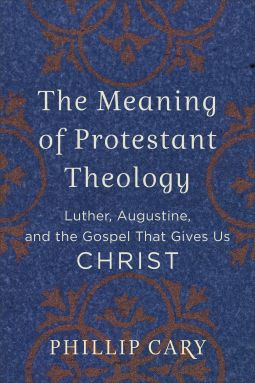
The Meaning of Protestantism - A Review


My first thought as I began to read the opening pages of Phillip Cary’s book “The Meaning of Protestant Theology” was that I had picked up a boring, poorly written book that would be difficult to recommend for an average reader.

That was my impression of the introduction - I thought I was looking at a book written for the very intelligent, scholarly reader, a class into which I do not place myself. I read all the introduction and my opinion did not change. It did not seem fair, however, to judge a book solely by its introduction, so I began chapter 1. I found a readable, interesting essay discussing the work of Plato as assimilated by early Christian writers. This sets the foundation for the book which is designed to follow the thoughts of Plato to Augustine to Luther and the Reformation.

The book is readable and interesting, unlike the introduction. The book will be of interest to those interested in the development of Protestant (Lutheran) theology through history - though the writer clearly states that he has no desire of leaving the reader a devotee of Luther’s teaching; the author clearly states that he is Episcopalian. Not a systematic theology, but clearly rooted in the discipline of historical theology.

Though not knowledgeable in this field, I found the book interesting and relatively easy to read as, to me, an introduction to historical theology. The book probably would not find a home in most local church libraries, though individual pastors with an interest in pre-Christian philosophy, early Christian theology, and the development of early Protestant thought may find it of interest. Most seminaries, both Protestant and Catholic, would find a place for this book in their collections as it begins by exploring the connection between Platonism and Augustine and ends by exploring the connection between Plato, Augustine, and Luther.
______________
This review is based on a free electronic copy provided by the publisher for the purpose of creating this review. The opinions expressed are my own.


Monday, January 1, 2018

The Linking Rings - A Review


The Linking Rings


By
John Gaspard


A Review


The Linking Rings is a fascinating look at London’s Magic Circle, “ the most prestigious magic club in the world” (as per Wikipedia), through the eyes of an amateur sleuth from
America as he and his friends attempt to solve a series of murders which systematically whittles away at the club’s members.


As the reader makes his way through this unique novel, they are introduced to a number of real professional magicians as well as the characters in the story. This reader found himself visiting Wikipedia multiple times to understand the men and women who define the world famous magician that call The Magic Circle their home in London men like Jay Marshal,  Tommy Cooper, and Chung Ling Soo. I did not look up every name dropped in the course of the book’s 250+ pages.


As the deaths mount up, the list of suspects diminishes, but enough remain to make an interesting and provocative tale.  Though the presence of magicians might make one expect the appearance of the macabre and mysterious, it is clear that all the magicians (both historical and fictional) are professionals, trained to entertain more than to introduce an unknown spiritual world (i.e. a world of ghosts, goblins, beasties, etc.). Though a number of tricks are described within the pages of the book, no secrets are disclosed, except those needed to identify the murderer.


For the fan of magic, cozy mysteries, or English history, The Linking Rings will make a good book to grab on a cold winter night or any other night.   
______________
This review is based on a free electronic copy provided by the publisher for the purpose of creating this review. The opinions are mine alone.


Tuesday, October 17, 2017

Evidence That Demands A Verdict - A Review


Evidence That Demands A Verdict.cover.jpg


A Review


Let me begin with a bit of truth in advertising. I was an invited member of the original Launch Team for the newest version of “Evidence That Demands A Verdict”. In return for being a part of the Launch Team, I received an e-book version of ‘Evidence” and a tee-shirt promoting the book. However, the e-book was flawed. By design, the pre-publication version that we were sent included a large watermark in the middle of each page, making it very difficult to read (at least for this reader). In spite of being a part of the Launch Team, I decided it would be unfair to review a book I could not fairly read.  Two months later I found (using my normal review book resources) an opportunity to receive and review a hard copy of the book. This review is based on both the original “Launch Team” version which I received last June and the hard copy I received earlier this month.


-----------------------------


I remember receiving the original version of “Evidence” as a junior or senior in college. I devoured it. As a new believer, I wanted to know and understand as much as possible about this faith to which I belonged. Later, after graduating from seminary, I discovered a new version and purchased it. I remember trying to become as excited about it as I had the original - it was not to be. I do not if it was further education, my personal faith journey (which took an unneeded bounce during those years), the fact that I had changed the immediate direction of my career (from pastoral ministry to Computer Science college professor), or the book itself which caused the loss of interest; but I had lost interest.


The year is now 2017 and the third (or is fourth?) edition of this classic book is being published. The newest version is not one I would not want to sit down and devour (though I know there are some readers who have done that), but I would not want to miss having the newest edition on my shelf. Rather being aimed for the newly converted college student, this new book is aimed for the college or seminary classroom or for the desk and shelf of the pastor or scholar. For many, not sitting in a classroom, it will become a reference book, rather than late night reading. But it is a reference book that many (or most) believers will want on their shelves.


At just under 800 pages, the book addressed most of the issues attacked by modern critics of the Christian faith. Whether it be philosophy, religions, history, or science (plus more) the reader will be challenged to examine evidence for the Christian faith. Whether a believer, skeptic, or atheist, the critical reader will need to respond to the author’s arguments. The book is thoroughly referenced with in-text notes and a Bibliography providing complete details of each resource quoted or used in the book. The only missing element, for most students of the scripture, is a set of sources allowing followup to the many topics discussed in the book. It will become the responsibility of the pastor, the teacher, or the individual reader to provide access to additional resources on topics of interest.  It is this missing element that prevents this reviewer from giving the book a 5-star review.


The book is not general reading - it is aimed at the scholar. Few (are there any?) diagrams can be found within the covers, though charts are present as needed which will help the reader to process the evidence presented.
_____________
This review is based on free paper and electronic copies provided by the publisher for the purpose of creating this review. The opinions are mine alone.


Monday, July 11, 2016

American Woman’s Bible - A Review


American Woman’s Bible


by

Dr. Richard G. Lee

A Review

I have stumbled upon other Bibles using American history as the source notes, devotional thoughts, or commentary. However, I found this edition to be of greater value that those that have crossed my path in the past.

The notes focus on the role that Christian Women have played in American history and how their lives have exemplified the role Christ, Scripture, and the church has had in preparing them for those roles. This is accomplished by including biographical sketches, quotations that have shaped others by or about American women, and a series of essays focusing on the virtues that have shaped our nation and the women who have been a part of that history.

My biggest disappointment is that the publisher chose to name only one male author of the book: Dr. Richard G. Lee. I suspect, like most Study Bibles and Devotional Bibles, the work was a collaboration of many scholars and spiritual leaders - but they are totally unnamed, either in a list of contributors or as the authors of individual pieces of writing. It would seem, to this reviewer, that if we have a Bible focused on the contributions of women to history, its contents should in some way be guided by women. I do not know where the error was made - in not giving credit for the women’s contribution or in not allowing women to contribute - but it seems that an error was made.

Having said that, this Bible edition does have value - just less than it might. The collection of biographies and quotes might help a pastor in preparation for next Sunday’s message. The devotional thoughts could easily be used by a teen or adult Sunday School teacher or Bible Study leader in preparation for next weeks lesson. My copy will sit on a night stand for my wife and I use with our personal devotions. I do expect that others will find it a blessing.
______________
This review is based on a free copy provided by the publisher for the purpose of creating this review.  The opinions expressed are my own.

Monday, January 11, 2016

Whispers in the Reading Room - A Review


Whispers in the Reading Room Cover.jpg


A Review

I don’t think I have ever read a book that left me with such mixed emotions. The author presents a beautiful picture of how God can take broken lives from a variety of backgrounds and transform them into something of value and worth. At the same time, the author reminds us that we cannot judge a book by its cover or a man by his coat.

The story takes place in the weeks and months following the closing of the 1893 Chicago World’s Fair. Lydia has the responsibility of running a local “Reading Room” in the Chicago community. Thus begins this mystery. I would call this a “mystery embedded in a romance” (which I find a bit uncomfortable reading), rather than a “romance embedded in a mystery” (which is more to my liking). But the four main characters have all strayed from their faith - when fate (i.e. God) brings them together.

Though Sebastian Marks is a man of mystery, the true mystery does not begin until the 50% point (using Kindle’s measurement) of the book. The death of Lydia’s ex-fiance will force each member of their small group to rethink friendships, beliefs, and behaviors. And because of this, the book is much more about relationships than about the mystery.

The book is well-written, by a skilled writer. Her ability to weave the history of the era (and forcing this reader to search Google to discover more) is always a sign of a good book. Though the author seems to confuse the three fires that destroyed the remains of the World’s Fair site over a year’s time into a single event, the story was alive and real.

Bottom line - I enjoyed the book. I wish there had been less romance, but then i am male and thrive more on the excitement than on the romance. Would I recommend the book? Yes - for everyone, but for some more than others. If you like a mix of history, mystery, and romance, you will enjoy “Whispers in the Reading Room.”
______________
This review is based on a free electronic copy provided by the publisher for the purpose of creating this review. The opinions are mine alone.

Monday, December 7, 2015

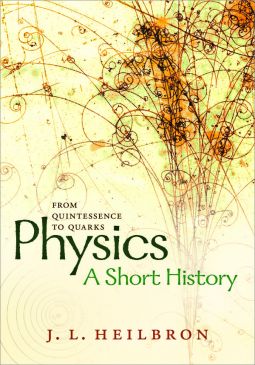
Physics: A Short History From Quintesence to Quarks - A Review


Physics A Short History.jpg


A Review


An interesting book - written for the knowledgeable reader, this history of physics assumes a great deal of prior knowledge as the moves from the study of physics as evidenced by the ancient Greeks into the early Christian Era, ending up in the modern era. The writer writes as if the reader will know the main (and some not so main) players in that history, dropping names and events that might be well-known to the physics student, but less so to the average lay reader.


This becomes less of a problem as the book moves slowly into the medieval and modern eras as names that have become famous during the development of the atomic bomb or other intriguing scientific discoveries move into the discussion.


Though interesting, these assumptions occasionally make the book difficult to follow - even for this scientifically knowledgeable reader.  The book would be a good text or ancillary text for a graduate history of science course. I would have a difficult time recommending it for the typical college graduate without having an undergraduate degree in the sciences.
______________

This review is based on a free electronic copy provided by the publisher for the purpose of creating this review.  The opinions expressed are my own.

Monday, October 19, 2015

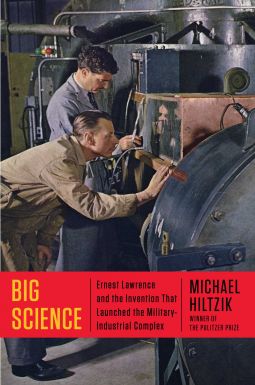
Big Science - A Review


Big Science.jpg


A Review


Though the book’s title and sub-title would seem to focus on the development of “Big Science”, the book is also a look at the scientific career of Ernest Lawrence.


Having spent a third of my life in the shadow of Berkeley, Stanford, Livermore, etc., I was well aware of many of the places in which the book is set - including having spent various amounts of time during High School and College at some of the locals mentioned in the 30+ years covered by the book. I remember looking across a field that lay near my house, seeing a huge water tower that, to my 7 or 8 year old mind, looked much like the nuclear bombs that were being exploded as tests on isolated islands or in the nearby Nevada desert.


The sites mentioned, included not only California, but such diverse locations known for housing various portions of the Manhattan Project: Los Alamos, the University of Chicago, Oak Ridge, Hanford, Argonne, etc. Each played a role in producing the first atomic bombs, the first hydrogen bombs, and, eventually, the first thermonuclear bombs. Along with places, we meet the people (Lawerence, Teller, Oppenheimer, etc.) who fashioned these implements of destruction - whether they come from the sciences, engineering, or politics. We see how relationships played a key role in the development of these new weapons. We also get a glimpse of the technology and the path it took toward using atomic energy - both as a weapon and as a tool to assist mankind in its own growth. The book’s science is not overwhelming, but provides enough details for the layman to appreciate the journey much of science took in the midst of the 20th century.


There is also, as hinted at in the sub-title, a strong emphasis on the growth of the merging of the military, industrial, political, and academic research to accomplish projects which were larger than could be understood by a single person. At times the pieces coming together were so big and so diverse that it was difficult for the reader to track the players in the game at any given time.


Though physics was the least interesting of the sciences to this reader, Hiltzik manages to present a story that held this reader’s attention. The book is recommended for anyone seeking to understand the nuclear politics that defined many of the years preceding the 21st century.
______________

This review is based on a free electronic copy provided by the publisher for the purpose of creating this review.  The opinions expressed are my own.

Tuesday, September 22, 2015

The Carols of Christmas - A Review


The Carols or Christmas cover.jpg

A Review

A well-done study of 21 of the carols that help us remember many of the themes that surround the Christmas holiday. Rather than taking a devotional perspective (like those done by Robert Morgan), the author has chosen to apply an academic approach as he introduces us to the hymns.  

The “Introduction” serves to help us understand the role Christmas carols play in Western society - including a look at their historical, theological, and denominational backgrounds. The introduction is a broad picture of what will come later as the author looks at the individual hymns.

The bulk of the book takes the reader through a group of 21 hymns in Biblical order - beginning with a hymn appropriate for use during all of Advent, moving through the days leading up to Christmas proper, Christmas Eve, Christmas Day, the angels, the shepherds, “The Twelve Days of Christmas,” and Epiphany.  The final hymn is “Jingle Bells.”  As can be seen the author includes both examples of secular songs and those with a more spiritual tone (e.g. “Away in A Manger,” and “O Come, All Ye Faithful.”)  The roots of the words (Biblical or not) and the music are explored.  Some of the stories associated with the music or words are full of as much mystery as a good Sherlock Holmes tale - with the true nature of their origins hidden till some unexpected source brought them to light. Though the focus is certainly academic, there are hints of devotional thoughts.  For example, as he concludes his look at “While Shepherds Watched”, the author notes that “... the full richness and variety of its history will, like the shepherds, have to wait.”  

Over the fifteen years I have served in the pulpit, I have occasionally taken my congregation through the history and setting of the church’s hymns. As I read Gant’s look at the Christmas carols, I am considering doing a similar series for the carols of Christmas. I expect it might be fun to look at the stories behind the carols as we have done with hymns in the past.
______________

This review is based on a free electronic copy provided by the publisher for the purpose of creating this review.  The opinions expressed are my own.


Wednesday, June 3, 2015

Planck - A Review


A Review

An interesting tale of the time prior to World War II and its completion, Planck's life paralleled that of the famous theologian Dietrich Bonhoeffer. It was that man, and the recently revised biography by Eric Metaxes, Bonhoeffer (Abridged): Pastor, Martyr, Prophet, Spy, that partially propelled my interest in Max Planck's life. My personal interest in the sciences (evidence by degrees in chemistry and computer science) served as the other focal point of interest in Planck's life.

Though the book focuses on Planck's last years of life, his early childhood and training is discussed by means of flashbacks and recollections from the men and women that knew him before his death. In addition, the book contains a bit of physics explained in ways comprehensible to the average reader.

While, Planck son took an active role in the assassination attempt on Hitler's life (being killed himself in 1945 for his part in the attempted bombing), Planck took a milder position – seeing the cruelty unleashed on his generation, yet choosing to not stand boldly against Hitler hoping to contribute to post war Germany in spite of his age.

Max Planck, nicknamed the Father of Quantum Physics, died at the age of 90 on October 4, 1947. Though his name is well-known, his contributions to physics are not as well-known by the general-public as those of Einstein and other physicist of his time. However, without his research, there might still be holes in our knowledge of modern physics.

The book was an interesting read, fitting well with Bonhoeffer's similarly timed autobiography. It comes with a strong recommendation for anyone interested in the history of science. Though occasionally rambling, as the author moves between events current in Planck's life and those that occurred in the past, the book is enjoyable and helped this reader understand the era as it was played out in mid-20th century among the German people.
______________

This review is based on a free electronic copy provided by the publisher for the purpose of creating this review.  The opinions expressed are my own.