Showing posts with label Christian. Show all posts

Saturday, February 26, 2022

Poems of Faith - A Review


Poems of Faith


Edited By

Bob Blaisdell

A Review


Bob Blaisdell has republished his collection of 100 poems selected “from five hundred years of English verse”. Some of the authors are well-known (e.g. Charles Wesley and and John Donne), but many are less well-known. Coming from so many sources and over so many years, this collection of poetry seems less connected than other works that have crossed my path this past year.

Many of the selected works spoke to this reader; but it seemed, at times, easier to find pieces that were either so generic that they might apply to everyone or disconnected to this reviewer's life. I might be more likely to leave this book sitting on my coffee table than to use it as part of my daily spiritual reflections. I give this book three stars.
______________
This review is based on a free electronic copy provided by the publisher for the purpose of creating this review. The opinions expressed are mine alone.


Wednesday, February 26, 2020

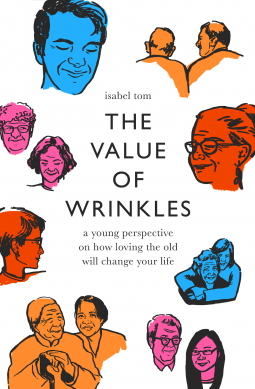
The Value of Wrinkles - A Review


Isabel Tom grew up with grandparents living right next door to her - literally, they shared a bedroom wall in the same house. Her chosen ministry while attending Houghton College was to serve the senior adults in her community by making weekly visits to their living facilities. Her first “real” job out of college was an opportunity to explore the various ways care was provided to the elderly (defined, for the sake of the book, to be those aged 65 and up). Now, 15 years later, she writes about her experiences, what she has learned, and what others can value when spending time with the elderly in our communities. Ms. Tom continues to work with the elderly even as she raises her own children.

The book is about ministering to those 65 and older. How to listen to them, how to learn from them, and how to value them. She allows the reader to appreciate those who are sometimes left out of modern western society and under-valued by a world that can quickly pass them by. The book is not a “how-to” book, but it is practical. It comes full of hints on how to begin conversations, how we (at any age) can empower them in age-appropriate ways, and encouraging the reader to learn from those who have lived life before us.

The book is a must-read for all those who will interact with their elders - whether on the job, in a faith community, or within our families. The book would be of value to teens trying to navigate their grandparents - whether they are physically present or living some distance away. The Value of Wrinkles will provide hints to youth leaders on ways that their charges can minister to and learn from those at the other end of life’s spectrum. Pastors will find new ways to interact with their aging congregations. Parents will find suggestions for encouraging their children to discover the lives of their grandparents and great-grandparents.

The bottom line is that “if you interact with the elderly, this book will support your contact with them.” It belongs on the shelves of public libraries, church libraries, and on the desk of ministry professionals.
______________
It should be noted that this book is written by a graduate of the nearby college supported by my denomination. This being said, I do not know or had contact with the author. This review is based on a free electronic copy provided by the publisher for the purpose of creating this review. The opinions expressed are my own.


Tuesday, October 17, 2017

Evidence That Demands A Verdict - A Review


Evidence That Demands A Verdict.cover.jpg


A Review


Let me begin with a bit of truth in advertising. I was an invited member of the original Launch Team for the newest version of “Evidence That Demands A Verdict”. In return for being a part of the Launch Team, I received an e-book version of ‘Evidence” and a tee-shirt promoting the book. However, the e-book was flawed. By design, the pre-publication version that we were sent included a large watermark in the middle of each page, making it very difficult to read (at least for this reader). In spite of being a part of the Launch Team, I decided it would be unfair to review a book I could not fairly read.  Two months later I found (using my normal review book resources) an opportunity to receive and review a hard copy of the book. This review is based on both the original “Launch Team” version which I received last June and the hard copy I received earlier this month.


-----------------------------


I remember receiving the original version of “Evidence” as a junior or senior in college. I devoured it. As a new believer, I wanted to know and understand as much as possible about this faith to which I belonged. Later, after graduating from seminary, I discovered a new version and purchased it. I remember trying to become as excited about it as I had the original - it was not to be. I do not if it was further education, my personal faith journey (which took an unneeded bounce during those years), the fact that I had changed the immediate direction of my career (from pastoral ministry to Computer Science college professor), or the book itself which caused the loss of interest; but I had lost interest.


The year is now 2017 and the third (or is fourth?) edition of this classic book is being published. The newest version is not one I would not want to sit down and devour (though I know there are some readers who have done that), but I would not want to miss having the newest edition on my shelf. Rather being aimed for the newly converted college student, this new book is aimed for the college or seminary classroom or for the desk and shelf of the pastor or scholar. For many, not sitting in a classroom, it will become a reference book, rather than late night reading. But it is a reference book that many (or most) believers will want on their shelves.


At just under 800 pages, the book addressed most of the issues attacked by modern critics of the Christian faith. Whether it be philosophy, religions, history, or science (plus more) the reader will be challenged to examine evidence for the Christian faith. Whether a believer, skeptic, or atheist, the critical reader will need to respond to the author’s arguments. The book is thoroughly referenced with in-text notes and a Bibliography providing complete details of each resource quoted or used in the book. The only missing element, for most students of the scripture, is a set of sources allowing followup to the many topics discussed in the book. It will become the responsibility of the pastor, the teacher, or the individual reader to provide access to additional resources on topics of interest.  It is this missing element that prevents this reviewer from giving the book a 5-star review.


The book is not general reading - it is aimed at the scholar. Few (are there any?) diagrams can be found within the covers, though charts are present as needed which will help the reader to process the evidence presented.
_____________
This review is based on free paper and electronic copies provided by the publisher for the purpose of creating this review. The opinions are mine alone.


Monday, June 20, 2016

ABC’s of Christianity - A Review


ABCs of Christianity.jpg


A Review


When I first chose this book to review, I did so based solely on the title. I knew nothing about the author, I knew nothing about the book. But the title did catch my eye. I have not been disappointed.


I began the review process by trying to find out something about author. When I did a Google search of details about this author, I was surprised to find, with few exceptions, that the author’s name is most often associated with the former CEO of the Dallas Mavericks basketball team. That was not very comforting - I am not a sports fan. A bit more (actually quite a bit), I discovered that the author of this book was not the former CEO of the Dallas Mavericks. Instead the author is the father of the former CEO of the Dallas Mavericks. The author has been married for 59 years, has three children, five grandchildren, and three great-grandchildren. He has served in ministry for 50+ years, beginning with an appointment to a local AME church. He now serves, while retired, as an assistant to the pastor of a local Presbyterian church in Southern California. The book I have been asked to review is the culmination of several years of leading a small Bible Study in his home.


The best way to describe The ABCs of Christianity is to compare it to an older work by another great Christian from an earlier generation - Henrietta Mears’ What the Bible Is All About. What Mears’ work did for the study of scripture, Dr. Ussery’s work is set to do for the church’s study of theology. Both books are written for a similar audience - the layperson wanting to know more about God and his word. Each major area of theology is discussed in small chunks using scripture. Though the book is thorough, it is not so deep as to scare off the average reader. Rather it prepares him or her to study more, as desired. If there is weakness, it is the lack of hints for further study - few, if any references to other theological works are presented.


The book is not only a study of theology, but also an examination of how it needs to challenge us as believers in our day to day lives. Practice is as important to this author as truth.


The book belongs in the church library, in the Sunday School curriculum, and on the layman’s reference shelf, right next to What the Bible Is All About.
______________

This review is based on a free electronic copy provided by the publisher for the purpose of creating this review.  The opinions expressed are my own.

Tuesday, March 29, 2016

I'm Not Afraid - A Review


I’m Not Afraid

Im Not Afraid.jpg

Written by
Lee Ann Mancini
Illustrated by
Dan Sharp


A Review


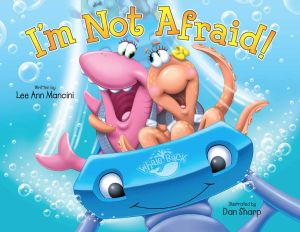
Lee Ann Mancini has put  together a fun, colorful book aimed at the preschooler or early reader. Fear is a common emotion – but an uncomfortable one for many people. The art and story will help the young child understand that fear is normal and that Jesus can help him or her deal with their fears.
The colorful 3-D fish will hold the reader’s attention – whether the book is being read to the child or the book is being read by the child. After reaching the end of the book, I was surprised to find I had missed the book’s hidden secret: each page includes a small hidden image to be found within the picture (ala Where’s Waldo). Finding out the secret, I was forced to again walk through the book to find the unexpected prize found on each page.
The book will serve as a swell gift from a parent to a child or a welcome addition to the home,  Church, or Sunday School library. Some public libraries will feel comfortable adding it to their collections as well.
______________
This review is based on a free copy provided by the publisher for the purpose of creating this review.  The opinions expressed are mine alone.

Monday, October 5, 2015

I Dare You Not To Bore Me With The Bible - A Review


I Dare You Not to
Bore Me With the Bible

I Dare You Not To Bore Me With the Bible Cover.jpg

by
Michael S. Heiser

A Review

The current volume seems like a book that seems to have no purpose, but that I found extremely interesting.

Let me begin with a disclaimer - I am a regular user of LOGOS Bible software, but I do not subscribe to Bible Study magazine published by the same company. Having said that, it should be noted that the route that this book took toward publication included a stop in Bible Study magazine. The essays collected here began as a series of lectures (or parts of lectures) in the author’s classroom. From there, they were transformed into essays published in Bible Study magazine. The essays were then collected and reprinted in the book form found here. I appreciated the broad range of topics discussed from the Old Testament and the New Testament. In addition, the author often throws in a few interesting tidbits of information (“Quickbits”) to whet the reader’s appetite for more details.

Other than the author’s lectures and essays, there is little that connects the various pieces of this book together. But that does not mean that the pieces are not of interest. Each essay forced this reader to think and evaluate his own understanding. I could get no further than the second essay and I was forced to rethink the meaning and purpose inerrancy - a major proponent of both my seminary training and my denominational choice. I found the anecdotes and background material fascinating as I read.

The essays have been rearranged Biblically, rather than in the order originally written - in fact, other than a short statement in the preface, there is no indication of the exact location where the original essays are located or the order in which they were produced.  In addition, each of the author’s main points are well documented from scripture, but there is little other secondary or primary sources for the reader to assist in further study. This lack of bibliographic detail is the major flaw in the book. There are some, but most of the independent essays lack the needed supporting material.

The electronic version of the book I received had no indexing - it would be hoped that a paper edition would include a thorough Biblical index. This should include both an index of the passages discussed and of the Biblical material referenced throughout the book. These missing elements are not significant in an e-book as searching can reproduce many of the needed references. Scripture is so important to the author’s arguments, that would be a significant hole in a paper edition.

Though not designed as a devotional book, the design and layout of the book might allow some readers to use it as such. Others would want to use it as a reference book for the variety of problems and issues addressed. The book would be a welcome addition to the supplemental reading used in a Bible survey course for the Bible College or Seminary student. The pastor may find it of some use as a source of sermon illustrations and teaching resources.  For some the young Christian, the essays may present a challenge to their faith.
______________
This review is based on a free electronic copy provided by the publisher for the purpose of creating this review.  The opinions expressed are my own.

Tuesday, September 29, 2015

7 Women - A Review


7 Women Cover.jpg


A Review


Six months ago Eric Metasas wrote a set of biographies based on the lives of 7 Men who influenced not only their own generation, but continue to influence ours.  Earlier this month, he did the same for seven significant women.


The seven women chosen to review are


  1. Joan of Arc
  2. Susanna Wesley
  3. Hannah More
  4. Saint Maria of Paris
  5. Corrie ten Boom
  6. Rosa Parks
  7. Mother Teresa


The format of the biographies are similar to those used in the earlier book except that in the earlier book each chapter concluded with a summary of the significance of each man chosen for review.  In the current book, the biographical sketch concludes with a few paragraphs on the later influence of each woman on society. The stories are worth the time spent reading and reflecting on them. Beside being great devotional material for all believers, they could also support the pastor looking for material to illustrate weekly sermons. The two books are recommended for all looking to examine the life of Christians who have effected the world they were called to serve.
______________

This review is based on a free electronic copy provided by the publisher for the purpose of creating this review. All opinions are mine alone.

Tuesday, May 12, 2015

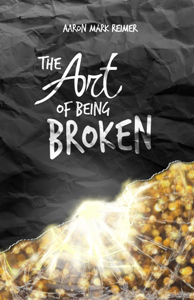
The Art of Being Broken - A Review


A Review


“The Art of Being Broken” is a bit of a misnomer.  Since we are all broken, it takes no talent, no artistic ability, to be broken.  It comes with the territory as a part of the human race.  Our brokenness only becomes art when taken into the hands of God and reshaped and remolded into His image.  And that is what the author does in his 200-page guide to living with our brokenness - however that brokenness manifests itself in our individual lives.


I loved the book - it picked up themes of my own life.  Themes that I discovered and lived through 20 years ago (and in reality, I still do), but themes I had to understand if my own family was going to survive.  It was a joy to relive lessons that I learned as my wife and I rebuilt our marriage from the broken pieces we brought into it. Did we ever reach perfection?  No.  But we have learned to appreciate the broken pieces that have become the mosaic that is our marriage (chapter 12).  The book provides 14 views of the brokenness that defines a human’s existence and demonstrates how God takes that brokenness and uses it for his purposes.


Though written as a monograph, the book is better read as a devotional - not a chapter per day, but a section or two per day.  Reading it like a book, with chapters, one will not have the time needed for the lessons that it contains to enter the heart.  Taking the time to read a section or two each day, and meditating on those details, allows the reader’s heart, mind, and soul, to be touched by the author’s insight.


Though I was provided an electronic copy of the book, I could easily have used two paper copies - to be cut and pasted into my illustration file.  Even as I read, I found myself recommending the book as I borrowed illustrations included therein.  One of those, was the “mosaic” referenced above; the other is a test of what we worship - check out what we are sacrificing for and to. Not every sacrifice is worthy of worship, but at the very least it serves as a caution light that calls us to ask “what might I be worshipping with this sacrifice.” (Chapter 11)  Those are two examples (there are more) - the book is full of practical and theoretical examples that will serve to help any broken Christian (hey, that is all of us) grow in his or her faith.


The book should be required collateral reading for the college or seminary course in pastoral counseling. The book would be a wonderful tool for any believer walking alongside others. Whether working the youth or the adult, whether working with singles or families, whether working with newlyweds or the elderly, the book offers valuable insight into the broken souls we all bring to the cross. The Art of Being Broken” comes with a strong recommendation.

The preparation of a small group discussion guide would add additional value to the book - whether those questions were to be used by an individual or a small group. A website hosting an online discussion is available, though this may be too public for some people. However, the website might serve as a useful way to distribute a discussion guide.
______________

This review is based on a free electronic copy provided by the author for the purpose of creating this review.  The opinions expressed are my own.
______________

Further correspondence with the author indicates that he will make a study guide available prior to the official launch date in June. I will look forward to seeing it in the near future.


Wednesday, March 4, 2015

How To Read The Bible Like A Seminary Professor - A Review


A Review

It was during the first day of High School Algebra class that I was introduced to the spiraling didactic method.  The idea is that the same material is repeated multiple times during the term (a year of High School Algebra), but each iteration builds on the material presented in the earlier iteration.  Until stumbling upon the current book, I had not seen this approach applied to any other discipline.  Mark Yarbrough has applied it well to study, understanding, and delivery of scripture.

The chapter titles are useless, except to make the reader curious.  On the other hand, the first chapter starts where one might expect - at the beginning. The author does this by pointing out that there are three basic steps needed to study the scripture:

1. Know It
2. Work It
3. Live It

With that beginning, the author begins in chapter two discussing the basic structure of the English Bible.  The Old Testament is divided into five sections, beginning with "the Torah" and ending with the "Minor Prophets."  The New Testament is presented as four sections, beginning with the Gospels and ending with Revelation.  Though, even this basic review is designed for the believer unfamiliar with the Scriptures, it is presented in such a manner that it serves as a helpful review for the lifelong follower of Jesus.

The next iteration of the book steps back and take a close look at each of the sections identified above.  Beginning, again, with the Old Testament (one chapter) and then the New Testament (a second chapter), the author walks through the entire Biblical history using wide brush for each of the nine sections identified in the second chapter.  Jesus is clearly presented as the Messiah, the answer to the hopes and needs of the Jewish nation as well as that of the whole world.  

Chapter six is a summary of six (coincidence?) doctrinal statements that have defined most of the church for 2000+ years.  They are not as detailed one might expect from a denominational statement of faith or from a seminary - but they are specific enough that most (all?) Christians could not find fault with them.  The author approaches each statement from three perspectives: a brief description of the doctrinal position, a short (not all-inclusive) scripture summary supporting the statement, and a short discussion on the ramifications of the position for the Christian - both in terms of theology and in terms of living the Christian life.  

The next ten or so chapters present the procedures for "working the text,"  in other words, how to do Bible Study.  The material may be too detailed for the new believer, but too general for the established Christian.  Regardless, there is material of value to the Christian grounded in the Scriptures and help that will require rereading (multiple times) for those just beginning the Christian journey.  Questions directly linked to Bible Study (e.g. what to look for when reading the text for the first time) and indirectly linked to Bible Study (e.g. what translation or translations will I want to use as I study the Scriptures).  Tools for making accurate observations, interpretations, and applications are included in these chapters.  Again, material is sufficiently deep to be of interest to both the new and experienced student of the Bible.  The author also makes room for the different genre that comprise the scripture - narrative, poetry, letters, and prophecy, providing guiding questions for understanding the content of each genre.

As a book about hermeneutics, this book stands out because it focuses on the Scriptures rather than the preacher.  From page one, it wants the reader to change because of his or interaction with Scripture - it is not so much about preparing the preacher, but about how the Scripture can and will change the preacher.  

The book would fit well in the library of any serious Christian.  It could be used as an undergraduate text in hermeneutics or as an ancillary text for a graduate level course in seminary.  The book would also serve well as a refresher for the pastor or Christian professor seeking to revitalize his or her time in the Bible.  My prayer is that each reader will feel the desire to dig deeper, to learn more, and become more like the Savior as they read and apply the book's content.
___________________________

This e-book was supplied as a gift from the publisher for the purpose of creating this review. The reviews are mine alone.

Wednesday, January 28, 2015

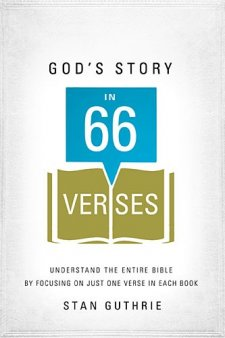
God’s Story in 66 Verses - A Review


A Review


I was concerned when I first saw the title of this book.  God provided 66 books in the Bible - how could anyone fairly reduce each book to a single verse?  Obviously, one cannot.


However, unlike the title suggests, the Stan Guthrie does not do so.  Rather than providing a commentary on 66 verses, he provides a rather complete introduction to each of the 66 book beginning with what most of us would call the key verse.  


As is my usual practice with such books, rather than reading the entire book, I spend time exploring those books I am currently studying.  This week that involves the book of Galatians in the NT (from which I am preaching) and the book of Joel in the OT (the subject of a small group Bible Study I am part of).  In each case the author has created an accurate introduction to the texts, using not just the key text but several key texts found throughout the book being studied. I found the book easy to read and follow - even though it has a degree of depth I might not expect from such an introduction.  Though written for a more scholarly audience, the content and overview provided is similar to that provided by Henrietta Mears in her classic, What the Bible is All About.  The content could also serve as an the book introduction similar to that found at the beginning of most Study Bibles, but with a bit more depth.


The book could be a good Bible introduction for anyone seeking to read the Bible through in a year or two.  It could also serve as the starting point for a sermon series moving a congregation through the entire Bible - a dream of mine, but unlikely to occur given my current congregation. content is too brief to serve as a Bible Introduction text in a College or Seminary course, but might serve that purpose well in a Sunday School or small group Bible Study.   
______________

This review is based on a free electronic copy provided by the publisher for the purpose of creating this review.  The opinions expressed are my own.

Thursday, January 22, 2015

Sabotaged - A Review


by


A Review


As a former professor, I think tests are great.  Let me give one - but I will include my own answers.

    1. Do you enjoy mysteries? YES
    2. Do you enjoy drama? YES
    3. Do you enjoy Christian books? YES
    4. Do you enjoy a hint of romance? YES


If you, like I did, answered “YES” to each of these questions, you will likely enjoy Sabotaged by Dani Pettrey.  


Kirra Jacob’s cousin has been kidnapped in order to coerce her uncle to take part in some unknown criminal activity.  Saving her cousin and discovering the nature of her uncle’s involvement in the criminal plot provide the plot for a great adventure.  Following the Iditarod Sled Race from Anchorage to Nome, Alaska, provides the scenic backdrop for the story.  The descriptive action along that route, and throughout other Alaskan landmarks provide an opportunity for the reader to virtually visit territory generally unreachable by the average reader.  Keeping Google and Wikipedia close at hand will provide tools to further explore and appreciate a state that for most is inaccessible - but full of beauty and history, none the less.  


The Christian heritage brought by the McKenna family to the story allows the writer to weave, unobtrusively, the Christian faith into this 330+ page book.  And along with the rebuilding of faith that comes as Kirra moves from the brokenness she experienced following a rape several years earlier to understanding both God’s and a man’s love we get a sense of how God’s grace can work in the most broken of us.


With the Iditarod Dog Sled Race arriving soon, Sabotaged might provide the perfect late Winter, early Spring read as we await the arrival of green grass and red robins.  
______________

This review is based on a free electronic copy provided by the publisher for the purpose of creating this review.  The opinions expressed are my own.